Pretzels: Bake 8 Delicious Brezeln Perfectly
Pretzels, or Brezeln as they are known in Germany, are a beloved baked treat. This recipe promises you perfectly shaped, deliciously chewy, and authentically flavored Pretzels, right in your own kitchen. Have you ever wondered if you could recreate the magic of a German bakery at home?
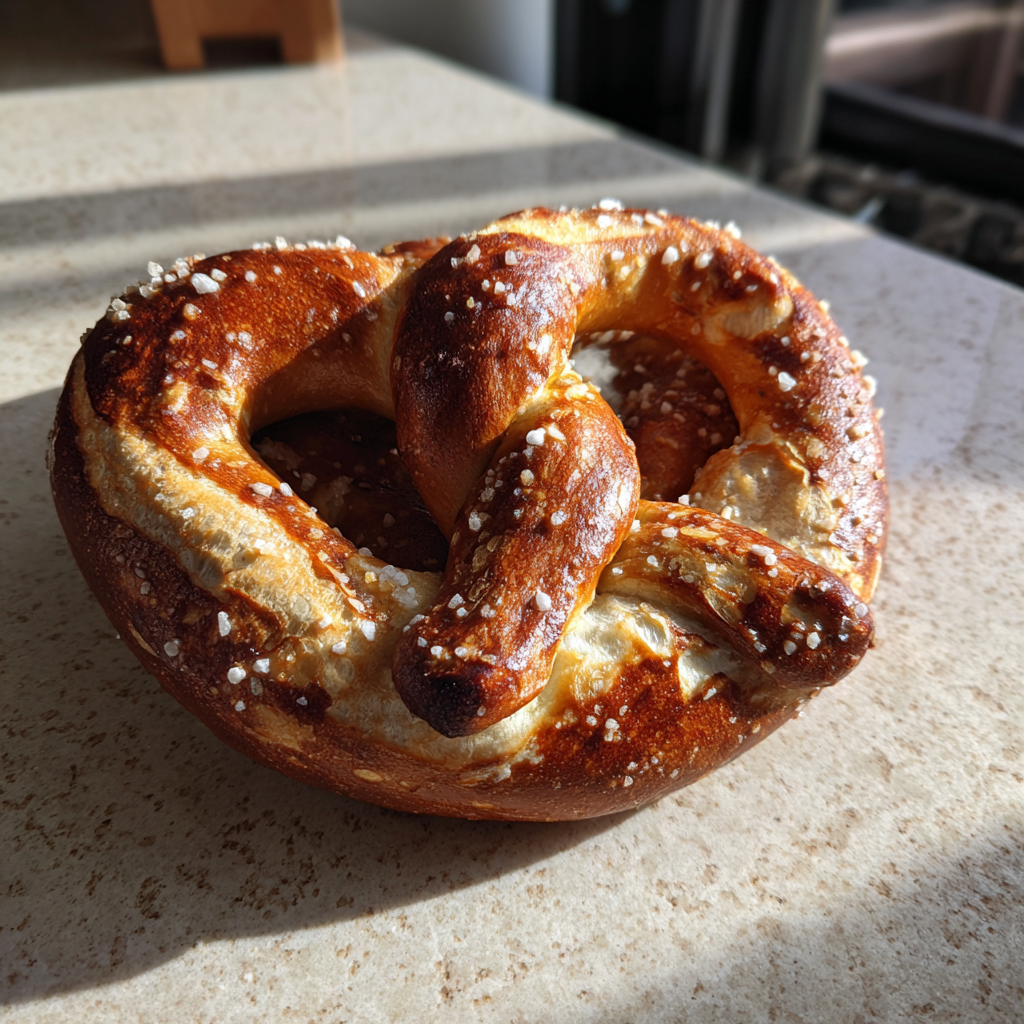
Imagine biting into a warm Pretzel, its dark, glossy crust yielding to a soft, airy interior. The aroma of freshly baked bread fills the air, mingling with the distinctive, slightly alkaline scent of the lye bath. The first taste is a delightful balance of salty and savory, with a subtle sweetness that lingers on your palate. The texture is superb: a satisfying chewiness that makes each bite a genuine pleasure.
The main star of our Pretzels, wheat flour, offers several health benefits. Wheat flour provides essential carbohydrates, which are your body’s primary source of energy. Moreover, it contains trace amounts of Iron, vital for oxygen transport, and B vitamins, which support nerve function. For a slightly healthier twist, consider using whole wheat flour for added fiber.
Yeast, another crucial ingredient, is also surprisingly beneficial. Yeast is a good source of B vitamins, particularly B12, which is essential for neurological function and red blood cell formation. In addition, yeast contains selenium, an antioxidant that helps protect your cells from damage. Did you know that yeast has been used in baking for thousands of years, dating back to ancient Egypt?
Even the lye (Natron) used for the characteristic crust offers an indirect benefit. The alkaline environment created by the lye alters the proteins on the surface of the Pretzel, resulting in a unique browning reaction and flavor. This Maillard reaction not only enhances the taste but also creates antioxidant compounds. Furthermore, the salt sprinkled on top provides essential electrolytes.
Butter, although used in moderation, contributes essential fatty acids. These fats are vital for hormone production and nutrient absorption. Butter also contains small amounts of Vitamin A, which is important for vision and immune function. Remember to use unsalted butter to control the overall saltiness of your Pretzels.
This Pretzel recipe stands out because it replicates the authentic German baking process. The key is the lye bath, which gives Pretzels their distinctive flavor and texture. Unlike other recipes that use baking soda as a substitute, this recipe uses real lye (Natron), ensuring an authentic taste. This method, combined with careful attention to dough consistency and baking time, guarantees Pretzels that are indistinguishable from those found in German bakeries. [INTERNAL_LINK_1] Furthermore, this recipe has been tested and perfected by home bakers, ensuring success even for beginners.
This recipe has been a family favorite for generations, bringing joy to countless gatherings. It’s easier than you think, even for those who have never worked with lye before. You’ll be amazed at how simple it is to create these iconic German treats in your own kitchen. Moreover, the satisfaction of sharing homemade Pretzels with friends and family is truly rewarding.
Ready in just about an hour, this recipe yields 8 Pretzels. The skill level required is intermediate, primarily due to the use of lye. These Pretzels are perfect for a weekend baking project, a casual snack, or even a themed party. Best of all, they are a guaranteed crowd-pleaser.
What is Pretzels?
Pretzels, or Laugenbrezeln, are a type of baked bread product made from dough most commonly shaped into a distinctive symmetrical knot. The Pretzel shape is a centuries-old tradition. They are characterized by their unique flavor and dark brown, slightly glossy crust, achieved through a lye bath before baking. Pretzels are a staple in German-speaking countries and are enjoyed worldwide as a savory snack or accompaniment to meals.
Why You Will Love This Recipe
- Achieve an authentic German Pretzel taste and texture at home.
- Impress your friends and family with your homemade baking skills.
- Enjoy the satisfaction of creating a traditional German treat from scratch.
- Customize the recipe to your liking with various toppings and flavors.
- The lye bath creates a unique flavor that can’t be replicated with baking soda.
Ingredients You Need
- Hefe (Yeast): Essential for leavening the dough and creating a light, airy texture.
- Zucker (Sugar): Feeds the yeast and adds a touch of sweetness to balance the saltiness.
- Warmes Wasser (Warm Water): Activates the yeast and helps create a smooth dough.
- Weizenmehl Type 550 (Wheat Flour Type 550): Provides the structure for the Pretzels; Type 550 is ideal for a slightly chewy texture.
- Salz (Salt): Enhances the flavor and controls the yeast activity.
- Butter (Zimmerwarm) (Butter, Room Temperature): Adds richness and tenderness to the dough.
- Natron (Lye): Crucial for the distinctive crust and flavor; handle with care.
- Wasser (Water): For the lye bath.
- Grobes Salz (zum Bestreuen) (Coarse Salt, for Sprinkling): Adds a salty crunch to the surface.
How to Make Pretzels Step by Step
- Activate the Yeast: In a small bowl, combine the yeast, sugar, and warm water. Stir gently and let it sit for 5-10 minutes until foamy. This indicates the yeast is active.
Pro Tip: Make sure the water is warm, not hot, to avoid killing the yeast. The ideal temperature is around 105-115°F (40-46°C).
- Combine Ingredients: In a large mixing bowl, combine the flour and salt. Add the yeast mixture and softened butter. Mix until a shaggy dough forms.
- Knead the Dough: Turn the dough out onto a lightly floured surface and knead for 8-10 minutes until smooth and elastic. The dough should be slightly tacky but not sticky.
Pro Tip: Proper kneading is essential for developing the gluten, which gives the Pretzels their chewy texture.
- First Rise: Place the dough in a lightly oiled bowl, turning to coat. Cover with plastic wrap and let it rise in a warm place for about 1 hour, or until doubled in size.
- Divide and Shape: Punch down the dough and divide it into 8 equal pieces. Roll each piece into a long rope, about 24-30 inches (60-75 cm) long, tapering the ends slightly. Shape each rope into a Pretzel.
Pro Tip: Watch videos online to master the Pretzel shape. Practice makes perfect!
- Prepare the Lye Bath: In a stainless steel or heat-resistant bowl, carefully dissolve the lye in the cold water. Always add the lye to the water, not the other way around. Be extremely cautious and wear gloves and eye protection.
Pro Tip: Lye is corrosive, so handle it with extreme care. Work in a well-ventilated area and avoid contact with skin and eyes.
- Lye Bath Dip: Carefully dip each Pretzel into the lye bath for 20-30 seconds. Use a slotted spoon or spatula to remove them. Place the dipped Pretzels on a baking sheet lined with parchment paper.
Pro Tip: The lye bath is what gives Pretzels their unique flavor and crust. Don’t skip this step!
- Score and Salt: Using a sharp knife or lame, make a shallow cut across the thickest part of each Pretzel. Sprinkle generously with coarse salt.
- Bake: Preheat your oven to 400°F (200°C). Bake the Pretzels for 18-22 minutes, or until they are deep brown and glossy.
Pro Tip: Keep a close eye on the Pretzels while baking to prevent them from burning.
- Cool and Enjoy: Let the Pretzels cool on a wire rack for a few minutes before serving. Enjoy warm!
Expert Tips for Best Results
- Use high-quality ingredients for the best flavor. Fresh yeast makes a big difference!
- Ensure the lye is completely dissolved in the water before dipping the Pretzels. Undissolved lye can cause burns.
- Don’t over-knead the dough. Over-kneading can result in tough Pretzels.
- If you don’t have Type 550 flour, you can use all-purpose flour, but the texture may be slightly different.
- For a richer flavor, brush the baked Pretzels with melted butter immediately after baking.
- Serve your Pretzels with Obatzda (a Bavarian cheese spread) or sweet mustard for an authentic German experience.
- If you are nervous about using lye, you can substitute it with baking soda, but the result will not be as authentic.
Variations and Substitutions
- Gluten-Free: Use a gluten-free flour blend to make gluten-free Pretzels. Be sure to add a binder like xanthan gum.
- Vegan: Substitute the butter with a plant-based butter alternative and ensure your yeast is vegan-friendly.
- Sweet Pretzels: After baking, brush the Pretzels with melted butter and sprinkle with cinnamon sugar.
- Flavored Salts: Experiment with different flavored salts, such as garlic salt, onion salt, or smoked salt.
- Cheese Pretzels: Sprinkle the Pretzels with shredded cheese before baking.
How to Serve and Store
Serve your freshly baked Pretzels warm as a snack, appetizer, or side dish. They pair perfectly with beer, cheese dips, or mustard. In addition, they can be served with traditional German dishes such as sausages or sauerkraut.
Storage: Store leftover Pretzels in an airtight container at room temperature for up to 2 days. They tend to lose their crispness over time. To refresh them, you can briefly reheat them in the oven.
Freezing: Yes, you can freeze baked Pretzels. Wrap them individually in plastic wrap and then place them in a freezer bag. They can be frozen for up to 2 months.
Reheating: The best method for reheating frozen Pretzels is to bake them in a preheated oven at 350°F (175°C) for 5-10 minutes, or until warmed through.
Frequently Asked Questions
Can I use baking soda instead of lye?
Yes, you can use baking soda, but the flavor and texture won’t be the same. Lye creates a unique crust. Baking soda will produce a less intense flavor.
How do I store the Brezeln?
Store them in an airtight container at room temperature for up to 2 days. Reheat to refresh. They are best eaten fresh for optimal taste.
Can I freeze the Brezeln?
Yes, freeze baked Pretzels wrapped individually in plastic. Store in a freezer bag for up to 2 months. Reheat in the oven.
What is the ideal temperature for the water to activate the yeast?
The ideal temperature is around 105-115°F (40-46°C). Too hot, and you risk killing the yeast. Too cold, and it won’t activate.
What type of flour is best for making Brezeln?
Type 550 wheat flour is ideal for a slightly chewy texture. All-purpose flour also works but may yield a slightly different result.
How do I handle the lye safely?
Always wear gloves and eye protection when working with lye. Add lye to water, not the other way around. Work in a ventilated area.
These homemade Pretzels are a delightful taste of Germany you can create in your own kitchen. The combination of the chewy interior and the distinctive lye-treated crust is truly irresistible. Try this recipe today and leave a comment below! [INTERNAL_LINK_2]
Print
Pretzels: Bake 8 Delicious Brezeln Perfectly
- Total Time: 130
- Yield: 8 Brezeln 1x
Description
Ein klassisches deutsches Laugengebäck: Laugenbrezeln! Mit dieser Anleitung gelingen sie dir perfekt – außen knusprig, innen weich und mit dem typischen Laugenaroma.
Ingredients
- 21 g Hefe
- 1 TL Zucker
- 150 ml Warmes Wasser
- 500 g Weizenmehl (Type 550)
- 1 TL Salz
- 25 g Butter (zimmerwarm)
- 40 g Natron
- 1 Liter Wasser
- Nach Bedarf Grobes Salz (zum Bestreuen)
Instructions
- Die Hefe mit dem Zucker und dem warmen Wasser verrühren. Ca. 5 Minuten stehen lassen, bis die Hefe schäumt.
- Das Mehl, Salz und die Butter in eine Schüssel geben. Die Hefemischung hinzufügen und alles zu einem glatten Teig verkneten. Bei Bedarf noch etwas Wasser oder Mehl hinzufügen.
- Den Teig zugedeckt an einem warmen Ort ca. 1 Stunde gehen lassen, bis er sich verdoppelt hat.
- Den Teig in 8 gleich große Stücke teilen. Jedes Stück zu einer langen Rolle (ca. 60 cm) formen. Die Rolle zu einer Brezel formen und auf ein mit Backpapier belegtes Blech legen.
- Den Backofen auf 200°C Ober-/Unterhitze vorheizen.
- Das Natron in dem Wasser auflösen. Vorsicht: Die Lauge ist ätzend! Schutzhandschuhe tragen! Die Brezeln einzeln für ca. 30 Sekunden in die Lauge tauchen. Gut abtropfen lassen und zurück auf das Backblech legen.
- Die Brezeln mit grobem Salz bestreuen und im vorgeheizten Ofen ca. 15-20 Minuten backen, bis sie goldbraun sind.
- Die Laugenbrezeln auf einem Kuchengitter auskühlen lassen und genießen.
Notes
- Achtung: Beim Umgang mit Natronlauge unbedingt Schutzhandschuhe und eine Schutzbrille tragen! Die Lauge ist ätzend und kann Haut und Augen reizen.
- Für eine intensivere Farbe können die Brezeln vor dem Backen mit Eigelb bestrichen werden.
- Statt grobem Salz können die Brezeln auch mit Kümmel oder Sesam bestreut werden.
- Prep Time: 30
- Cook Time: 20
- Category: Backen, Brot, Deutsches Gebäck
- Method: Backen
- Cuisine: Deutsch
Nutrition
- Calories: 250
- Sodium: 500
- Fat: 4
- Saturated Fat: 2
- Carbohydrates: 45
- Protein: 8
Keywords: Brezel, Laugenbrezel, Laugengebäck, Deutsches Brot, Selber backen