Description
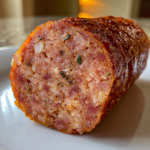
A traditional German Mettwurst recipe, perfect for enjoying on bread or as part of a charcuterie board. This recipe focuses on a simple, flavorful Mettwurst, readily adaptable to your own preferences.
Ingredients
Scale
- 2 lbs Pork Shoulder (Well-chilled, cut into 1-inch cubes)
- 0.5–1 lb Pork Belly (Well-chilled, cut into 1-inch cubes (adjust based on desired fat content))
- 25–30 g Salt (Curing salt / Prague Powder #1 (6.25% Nitrite))
- 5–7 g Black Pepper (Freshly ground)
- 2–3 g White Pepper (Ground)
- 2–3 cloves Garlic (Minced or finely grated)
- 1–2 tsp Marjoram (Dried, crushed)
- 1/2 – 1 tsp Caraway Seeds (Optional, whole or ground)
- 1/2 tsp Mustard Seeds (Optional, whole or ground)
- Optional Starter Culture (Follow package instructions for amount. Used for controlled fermentation and improved safety.)
- As needed Hog Casings (Natural hog casings, soaked in warm water for at least 30 minutes)
Instructions
- Prepare the Meat: Ensure the pork shoulder and pork belly are very cold. Partially freezing them can help with grinding. Grind the meat through a fine die (3-4mm) of your meat grinder. If you’re using a starter culture, mix it with a small amount of distilled water as per package instructions.
- Mix Ingredients: In a large bowl, thoroughly combine the ground pork shoulder, ground pork belly, salt (curing salt), black pepper, white pepper, garlic, marjoram, caraway seeds (if using), mustard seeds (if using), and starter culture mixture (if using). Mix well until the mixture becomes sticky and well-combined. This is crucial for good binding.
- Stuff the Casings: Rinse the soaked hog casings inside and out. Thread the casing onto the stuffing tube of your meat grinder or sausage stuffer. Carefully stuff the meat mixture into the casings, avoiding air pockets. Twist the casings to create links of your desired length (typically 6-8 inches). Prick any air pockets with a needle.
- Fermentation (Optional, but recommended if not using a starter culture): If using a starter culture, follow the instructions on the package. If not, hang the sausages in a cool (15-20°C / 59-68°F), humid (75-85%) place for 24-48 hours to allow for fermentation. This step is crucial for flavor development and preservation. If you don’t have a dedicated curing chamber, you can use a wine fridge or a modified refrigerator with humidity control.
- Cold Smoking (Optional): For a smoked Mettwurst, cold smoke the sausages for 6-12 hours at a temperature below 25°C (77°F). Use a light smoke, such as beech or alder wood.
- Curing: Hang the Mettwurst in a cool (12-15°C / 54-59°F), humid (70-80%) place for 1-3 weeks, or until they have lost approximately 20-30% of their original weight. The exact curing time will depend on the size of the sausages and your desired consistency. Check for proper drying and no mold growth. White mold is generally harmless, but green or black mold is a sign of spoilage.
- Storage: Once cured, store the Mettwurst in the refrigerator, wrapped in butcher paper or vacuum-sealed. It can also be frozen for longer storage.
Notes
- Important Notes: Always use curing salt when making raw sausages to prevent botulism. Monitor humidity and temperature closely during curing. If you are unsure about the safety of your curing process, consult with a knowledgeable butcher or sausage maker. Starter cultures greatly improve safety and consistency. Adjust spices to your liking. For a spicier Mettwurst, add chili flakes or cayenne pepper. Always practice proper food handling and hygiene when making sausages.
- Prep Time: 30
- Cook Time: 23
Nutrition
- Calories: ..
Keywords: Mettwurst, German Sausage, Raw Sausage, Pork Sausage, Spreadable Sausage, Teewurst